
FOREX
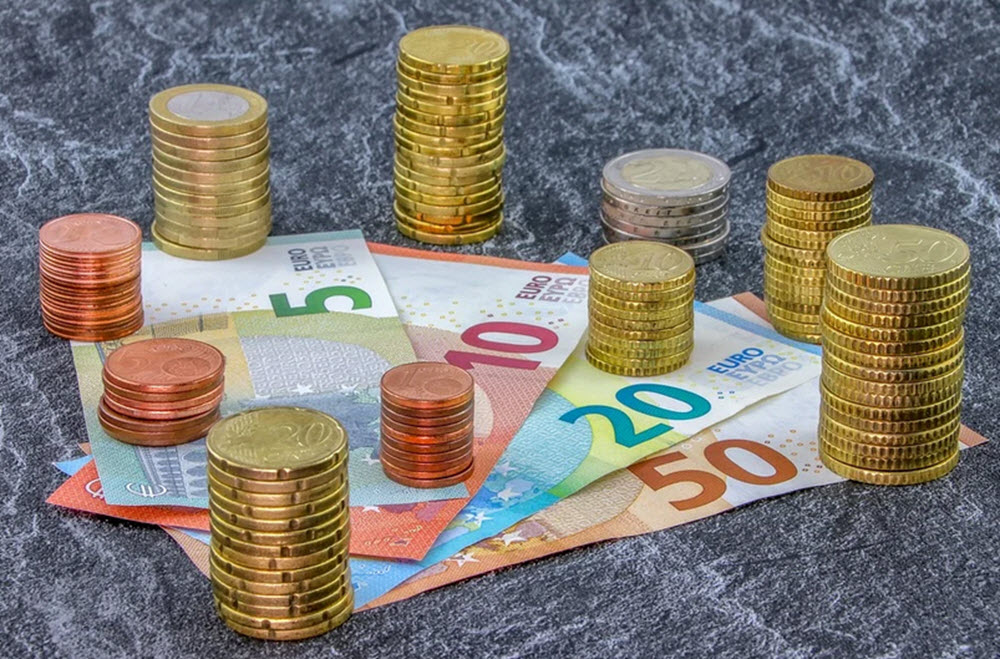
The foreign exchange market, usually shortened to forex or FX, is the global market where one currency is exchanged for another. Anyone who has travelled abroad has participated in foreign exchange in a simple form. You might exchange pounds for euros before a holiday, convert US dollars into Japanese yen after arriving in Tokyo or use a bank card that automatically performs the currency conversion for you.
Forex trading takes the same basic idea and turns it into a financial market. Instead of exchanging currency because you need to spend it somewhere, traders buy and sell currencies because they expect the exchange rate between them to change. A trader might buy the euro against the US dollar because they expect the euro to strengthen, or sell the pound against the dollar because they expect sterling to weaken.
The foreign exchange market is used by far more than speculative traders. Banks, international companies, investment funds, governments and central banks all exchange currencies for different reasons. A company might need US dollars to pay an overseas supplier, while an investment fund could need euros before purchasing European shares. Traders operate alongside this enormous flow of commercial and financial activity.
So, Forex is a market?
Yes. Forex is a global financial market, although it works differently from a conventional stock exchange. There is no single building or central exchange where all currency trades are processed. Much of the market operates over the counter through a network of banks, financial institutions, electronic trading venues, brokers and other participants.
It is also enormous. Global foreign exchange turnover is measured in trillions of US dollars per day, making FX one of the largest and most liquid financial markets. A substantial part of this activity comes from banks and financial institutions rather than individual retail traders. Foreign exchange swaps, spot transactions, forwards and options all contribute to total FX market activity.
Liquidity is particularly high in the most actively traded currency pairs. EUR/USD, USD/JPY and GBP/USD usually have a large number of buyers and sellers, helping keep the difference between buying and selling prices relatively small during normal market conditions. Less frequently traded currencies can have wider spreads and more irregular price movements.
The forex market attracts many types of participants. Commercial companies use it to make international payments and manage currency risk. Banks provide liquidity and execute transactions for customers. Investment managers exchange currencies when buying assets abroad. Central banks can enter the market as part of monetary policy or reserve management. Retail traders normally participate through an online broker and attempt to profit from changes in exchange rates.
Why do people trade forex?
Forex is popular with active traders because it combines high liquidity, long trading hours and relatively easy access through online brokers. It is also possible to speculate on both rising and falling exchange rates without owning physical banknotes or maintaining bank accounts in every currency being traded.
The Forex market is favourable for investments for many reasons, ranging from:
- Low Entry Point: many retail forex brokers allow traders to open relatively small accounts and trade small position sizes. A large starting balance is therefore not always required, although having access to trading does not mean a small account can safely support large positions.
- Competitive Trading Costs: some forex accounts do not charge a separate commission and instead make money primarily through the spread. Other accounts offer narrower spreads and charge a commission. The important number is the complete trading cost rather than whether a broker describes an account as commission free.
- A Focused Market: traders can concentrate on a relatively small number of major currency pairs instead of monitoring thousands of individual companies. This does not make forex easy, but it can make it easier to specialise in the economic factors that influence a handful of currencies.
- Leveraged Trading: retail forex is commonly traded on margin. Leverage lets a trader control a position worth more than the amount deposited as margin. This reduces the cash needed to open a position but also magnifies losses relative to the money committed to the account.
- No Directional Restrictions: forex makes it relatively simple to speculate on either currency in a pair strengthening against the other. Traders can therefore take positions in both rising and falling markets.
- Long Trading Hours: the global forex market trades around the clock during the working week. Activity moves between financial centres in Asia, Europe and North America, allowing traders in different time zones to participate.
These benefits come with trade-offs. Leverage makes market access more capital efficient but can also cause substantial losses. Long trading hours create more opportunities but can encourage excessive trading. Low account minimums make forex accessible to beginners, yet beginners are also the people most likely to underestimate how quickly a leveraged position can move against them.
How Do I Join?
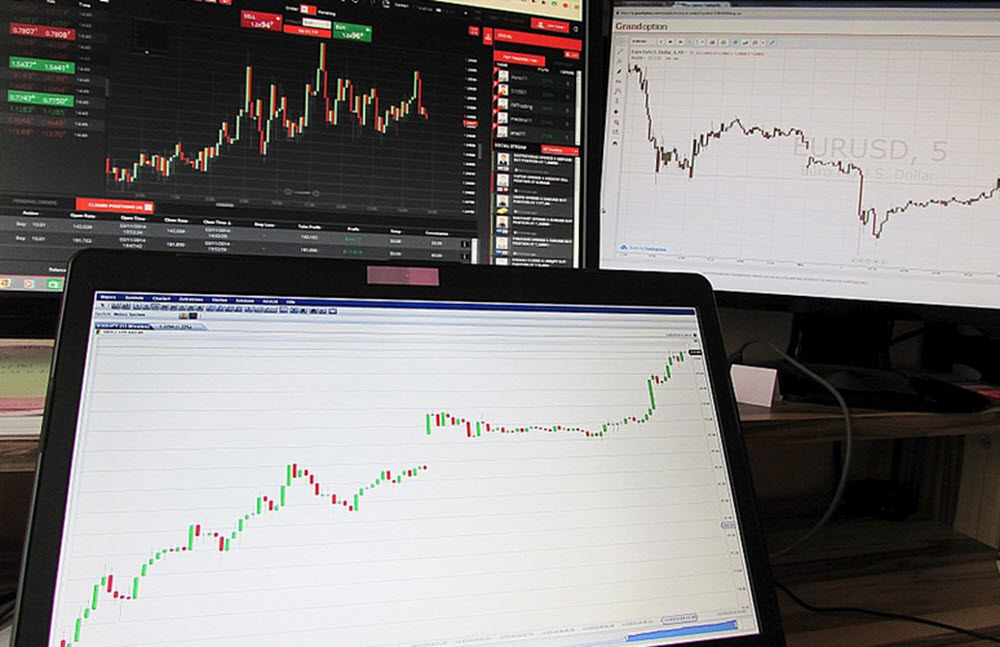
Partaking in the Forex market can seem confusing at first but retail access is relatively straightforward. The first step is normally to register an account with a forex trading platform. Examples of companies that have offered online trading services include eToro and AVAtrade. Before depositing money, check which legal company would hold your account, what regulator supervises it and what protections apply in your country.
Broker selection should not be based only on the lowest advertised spread. Trading costs, available currency pairs, execution, overnight financing, withdrawal procedures, platform reliability and customer protection can all matter. An account that appears cheap for one trading strategy can be expensive for another.
Most brokers also offer a demo account where orders can be placed using virtual money. A demo account is useful for learning the platform, understanding position sizes and seeing how currency pairs move. It is less useful for reproducing the psychological pressure of trading real money, so strong demo results should not automatically be treated as proof that the same strategy will work when capital is at risk.
How to trade forex currency pairs?
Currencies are quoted in pairs because every forex transaction involves buying one currency while selling another. EUR/USD, GBP/USD and USD/JPY are examples of major currency pairs. The first currency is called the base currency and the second is called the quote currency.
Suppose EUR/USD is trading at 1.1000. This means one euro is worth 1.10 US dollars. If EUR/USD rises to 1.1100, the euro has strengthened against the dollar. If the rate falls to 1.0900, the euro has weakened relative to the dollar.
The same principle applies to USD/JPY. If USD/JPY is trading at 150.00, one US dollar is worth approximately 150 Japanese yen. A rise to 151.00 means the dollar has strengthened against the yen, while a decline to 149.00 means the dollar has weakened against it.
The order of the currencies matters. USD/JPY and JPY/USD describe the same two currencies from opposite directions, so they will not display the same numerical exchange rate. Retail forex platforms normally follow established market conventions for which currency appears first.
Base currency and quote currency
The base and quote structure makes it easier to understand what a forex position actually means. Buying EUR/USD means buying euros while simultaneously selling US dollars. Selling EUR/USD means selling euros and buying dollars.
This is why forex trading should not be viewed simply as betting on whether one currency is “good” or “bad.” Every price compares two currencies. The euro can strengthen against the pound while weakening against the dollar during the same trading session. What matters is the relative strength of the two currencies in the pair.
Economic analysis therefore normally involves both countries or currency areas. A trader looking at GBP/USD might compare expectations for the Bank of England with expectations for the US Federal Reserve, as well as inflation, employment, economic growth and political developments on both sides of the pair.
What is a pip?
A pip is a standard unit used to describe relatively small movements in an exchange rate. For many currency pairs, one pip is the fourth decimal place. If EUR/USD moves from 1.1000 to 1.1001, it has moved one pip. A move from 1.1000 to 1.1050 is 50 pips.
Japanese yen pairs are commonly quoted differently. For a pair such as USD/JPY, one pip is usually the second decimal place. A move from 150.00 to 150.01 is therefore one pip.
The financial value of a pip depends on the currency pair and the size of the position. A ten-pip move can be financially trivial for a tiny trade and substantial for a very large trade. Position size therefore matters just as much as the number of pips gained or lost.
There is no rule saying that a currency pair usually moves only 50 or 100 pips per day. Daily ranges change with market conditions. Quiet periods can produce relatively small movements, while central-bank decisions, inflation reports, political events or financial stress can create much larger moves.
The bid, ask and spread
A forex quote normally contains two prices. The bid is the price at which the broker or market is willing to buy the base currency from you. The ask is the price at which you can buy the base currency. The difference between them is the spread.
Suppose EUR/USD is quoted at 1.1000/1.1002. A trader buying the pair pays approximately 1.1002, while someone selling receives approximately 1.1000. The two-pip difference is part of the cost of entering and exiting the position.
Spreads are usually tighter in highly liquid major currency pairs and wider in less frequently traded pairs. They can also widen rapidly around major news releases or during periods when fewer institutions are providing liquidity. The minimum spread advertised on a broker’s homepage is therefore not necessarily the spread a trader will receive on every transaction.
Major, minor and exotic currency pairs
Forex pairs are often divided into broad groups. Major pairs normally involve the US dollar and another heavily traded currency, such as the euro, Japanese yen or British pound. EUR/USD, USD/JPY and GBP/USD are familiar examples.
Pairs containing major currencies but not the US dollar are often called crosses or minor pairs. EUR/GBP and GBP/JPY are examples. These markets can still be highly active, although their liquidity and trading costs can differ from the largest dollar pairs.
The term exotic pair is often used for combinations involving a major currency and a currency from a smaller or emerging economy. Such pairs can have wider spreads and greater sensitivity to local political or economic developments. They should not be assumed to behave like EUR/USD simply because both appear on the same trading platform.
How leverage works in forex
Leverage allows traders to control a position worth more than the cash deposited as margin. If an account offers 5:1 leverage, a trader can theoretically control $50 of market exposure using $10 of margin. At 20:1 leverage, $1,000 of margin could support $20,000 of exposure.
This does not mean the $20,000 position behaves like a $1,000 trade. Profit and loss are generated from the full $20,000 exposure. If the currency pair moves 1%, the position changes by approximately $200 before costs. Relative to $1,000 of margin, that is a 20% change.
Leverage therefore magnifies the effect of currency movements on the money in the account. It can produce large percentage gains from relatively small market moves, but it does exactly the same to losses. The amount of leverage a broker permits should be treated as an account limit rather than a suggested position size.
Maximum leverage also varies by jurisdiction. Some regulators restrict the amount available to retail clients, while brokers operating elsewhere may advertise much larger ratios. Higher leverage does not improve the probability that a trade will be correct. It simply changes how much exposure can be created from a given amount of margin.
Going long and short
Forex does not require a permanently bullish view because every currency pair contains both a buy and sell side. If a trader expects the euro to strengthen against the dollar, they can buy EUR/USD. If they expect the euro to weaken, they can sell EUR/USD.
This makes it relatively easy to trade declining markets. The trader does not normally need to borrow physical currency in the same way that a conventional short seller might need to borrow shares. The trading platform handles the leveraged currency exposure through the account structure.
Short selling is not inherently easier to predict than buying. Currency prices can reverse suddenly in either direction. The ability to click both buy and sell simply means that trading opportunities are not restricted to periods when one chosen currency is rising.
Forex trading hours
The forex market operates around the clock during the business week rather than closing at the end of one national exchange session. Trading activity moves across the globe as financial centres open and close.
The Asian trading day begins first, followed by major European centres and then North America. London and New York overlap for several hours, a period that often produces particularly high activity in pairs involving the euro, pound and US dollar.
Forex is therefore often described as a 24-hour market, but that does not mean every hour provides identical conditions. Liquidity can be thinner at certain times, and spreads can be wider. The market also closes for the weekend, so forex should not be confused with a market that trades continuously 24 hours a day, seven days a week.
What moves currency prices?
Interest rates are one of the strongest influences on currency markets. Traders constantly assess what central banks are likely to do next. If markets begin expecting higher interest rates in one country relative to another, demand for its currency can change as investors reassess returns available on assets denominated in that currency.
Inflation, employment, economic growth and consumer activity can all influence those interest-rate expectations. Central-bank statements can sometimes move a currency more than the actual rate decision because traders are interested in what policymakers are likely to do several months into the future.
Political events also matter. Elections, government budgets, trade disputes and international conflicts can change expectations rapidly. Currency markets respond not only to what happens, but also to whether the event was better or worse than traders had already anticipated.
This is why apparently positive economic news does not always cause a currency to rise. If the market expected an even stronger result, a merely good report can disappoint traders and cause the currency to fall. Market prices reflect expectations before data is released.
Trading costs
The spread is one of the main forex trading costs, but it is not always the only one. Some brokers charge a separate commission, particularly on accounts offering very narrow or raw spreads. Others build more of their compensation into the spread.
Positions held overnight can also receive a financing or rollover adjustment. The amount depends partly on the currencies being traded, the direction of the position and the broker’s pricing. A trader who keeps positions open for several weeks should therefore pay more attention to rollover than someone who closes every position during the same session.
Currency conversion fees can apply if the trading account is denominated in a different currency from the profit, loss or instrument being traded. Slippage can create another cost when an order is executed at a worse price than expected during a fast-moving market.
Comparing brokers by one advertised spread can therefore be misleading. The relevant figure is the total cost produced by the way you actually trade.
Spot forex and retail forex
Professional spot foreign exchange involves exchanging one currency for another under established settlement conventions. Retail traders frequently use products whose prices closely follow the spot market but which do not require physical delivery of the currencies.
Depending on the broker and jurisdiction, the retail product can take the form of rolling spot forex, a CFD or another leveraged contract. This distinction matters because legal protections, tax treatment and financing arrangements can depend on the actual product rather than the chart displayed on the screen.
A trader who buys EUR/USD through a leveraged retail account is therefore not normally arranging to have hundreds of thousands of physical euros delivered to a bank vault. The broker maintains the trading exposure and calculates gains, losses and margin requirements as the exchange rate changes.
Day trading forex
Day traders open and close positions within the same trading day. Forex is popular for this approach because major currency pairs are liquid and can produce trading opportunities throughout several global sessions.
A day trader might use technical analysis to identify short-term trends, breakouts or reversals. Others focus on economic releases where currency prices can move rapidly after new information enters the market.
Short holding periods make transaction costs particularly important. A strategy targeting only ten pips cannot ignore a spread of one or two pips. A trader can therefore be directionally correct on many trades while still performing poorly after spreads, commissions and slippage are deducted.
Swing trading forex
Swing traders normally hold positions for several days or weeks and attempt to capture larger currency movements. They may combine chart analysis with interest-rate expectations, economic trends or other fundamental information.
Because swing trades remain open overnight, financing becomes more important. The trader also remains exposed to news released while they are away from the screen. Currency prices can gap or move sharply after an unexpected political event or central-bank statement.
Short-term spread differences generally matter less to a trader targeting several hundred pips than to a scalper trying to capture five. Broker selection should therefore reflect the intended trading style rather than simply choosing whichever account advertises the smallest minimum spread.
Forex risk management
The most important calculation in leveraged forex trading is not how much profit a position might make. It is how much money will be lost if the trade moves to the point where the original idea is no longer valid.
Suppose a trader is willing to risk $100 and plans to place a stop 50 pips away from the entry. The position should be sized so that those 50 pips correspond to approximately the intended $100 risk, allowing for trading costs and possible slippage. If another setup needs a stop twice as wide, the position would normally need to be smaller to keep the monetary risk similar.
This is very different from opening the largest position permitted by the broker and then deciding where to place the stop. Maximum leverage tells you what the account will allow. It does not tell you what the account can sensibly afford to lose.
Several positions can also create hidden concentration. Buying EUR/USD and GBP/USD while selling USD/CHF can amount to multiple related bets against the US dollar. If a major US economic announcement suddenly strengthens the dollar, all three trades could move against the account at the same time.
Stop-loss orders and slippage
A stop-loss order tells the broker to close a position after the market reaches a chosen level. Stops are useful because they allow traders to define an exit before emotions become involved in a losing trade.
An ordinary stop does not guarantee the exact final price. If a market moves rapidly through the stop level, the order can be filled at the next available price. This difference between the requested and executed price is known as slippage.
Slippage can be especially noticeable around major economic announcements, when exchange rates can change several times within a fraction of a second. Position sizing should therefore allow for the possibility that the realised loss is occasionally larger than the ideal loss calculated from the stop price.
Technical and fundamental analysis
Forex traders generally use technical analysis, fundamental analysis or a combination of both. Technical analysis studies price behaviour itself. Traders can examine trends, chart patterns, support and resistance, momentum and volatility in an attempt to estimate where price may move next.
Fundamental analysis focuses more heavily on economic and financial conditions. Interest rates, inflation, employment, growth and central-bank policy can all influence exchange rates. A fundamental trader might buy one currency against another because they expect monetary policy between the two countries to move in different directions.
Neither method guarantees an accurate forecast. Technical patterns can fail without warning and economic information can be interpreted differently by the market than expected. A trading method needs risk controls for the occasions when the analysis is wrong.
Is forex easy to trade?
Forex is easy to access but difficult to trade consistently well. Opening an account, loading a chart and placing an order can take only minutes. Building a method that remains profitable after spreads, commissions, financing and losing trades is considerably harder.
The relatively small number of major currencies can make forex easier to follow than a stock market containing thousands of companies, but currencies are influenced by complicated economic relationships. Interest rates in two countries, inflation expectations, international capital flows and changing risk appetite can all affect one currency pair at the same time.
Leverage adds another difficulty. A trader can be broadly correct about a long-term currency trend and still lose the account by taking positions that are too large to survive ordinary short-term volatility.
Starting with forex trading
A new trader does not need to follow every currency in the market. Concentrating on one or two liquid pairs can make it easier to learn what causes prices to move, what normal spreads look like and how the currencies react to economic announcements.
It also helps to decide on a trading time frame. A person checking charts once in the evening should not attempt to copy a strategy designed for trades lasting thirty seconds. A trader who enjoys following markets throughout the day might prefer shorter positions, while someone with less screen time can study slower swing setups.
Keep position sizes small while learning. The ability to trade with leverage does not create any obligation to use all of it. Staying in the market long enough to identify mistakes is usually more useful than attempting to double a small account quickly.
Forex gives traders access to one of the world’s most active financial markets. It offers long trading hours, liquid major currency pairs and the ability to speculate in either direction. Those features explain much of its popularity, but none of them remove market risk. Successful trading still depends on understanding the currency pair, controlling position size, accounting for costs and accepting that even a well-researched trade can be wrong.
This article was last updated on: September 14, 2026